
Lincoln, CA · Garage Door Service
What an Older Lincoln Garage Door Is Actually Worth Fixing
Lincoln homes built between 1970 and 2007 still run original garage door hardware. Here's what's worth repairing, and when it's smarter to replace for good.
- Repairs & new doors
- Springs & openers
- Serving 5 nearby communities
What Is Going On
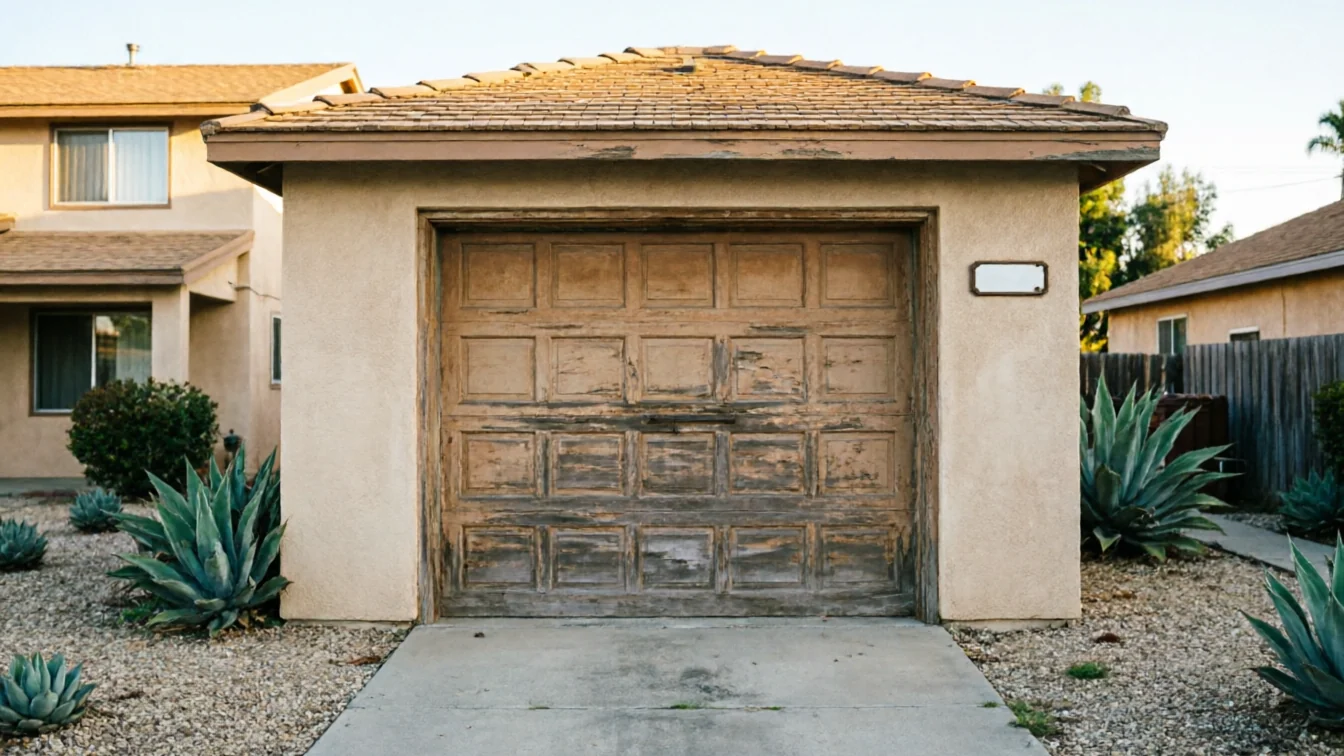
Most of the housing stock around Lincoln went up between 1970 and 2007, with a median build year of 1981. That means a lot of garages, whether they're up near Downtown Lincoln or out toward Lincoln Crossing and Verdera, still carry the original steel sectional door and the hardware that came with it: extension springs mounted along the horizontal track, a single light-duty opener, and rollers that were never built for a heavier insulated panel.
The bulk of that stock across this part of the county skews 1980s and 90s construction, which narrows the field some. If your door and opener date to that window, you're usually looking at one of a handful of common setups rather than something unusual. That's good news for repair, because parts for those years are still findable. It's bad news if the spring system has worn past its rated cycles or the track has racked out of square from years of use - at that point you're not fixing a part, you're fighting the whole assembly.
The honest answer on whether a door from this era is worth fixing depends on what's actually failed. A snapped cable or a dead opener logic board on an otherwise sound door is a repair. A warped panel plus a rusted track plus an undersized spring is a sign the door's done its job and it's time to talk replacement instead.
What Changes With the Season
Lincoln sits in a severe-heat climate band, and that heat is hard on exactly the kind of hardware this housing stock still runs. Steel panels expand and contract every day through the hot months, and on an older door that cycling works the seams and the roller brackets loose over years. Extension springs lose tension faster in sustained heat than torsion springs do, which is part of why doors from the 1980s and 90s setups start sagging on one side before anything else goes wrong.
Opener logic boards take a hit too. A garage that sits closed all day in severe heat can push well past the temperature the board was rated for when it was new, and that shows up as erratic behavior before it shows up as a dead unit - a door that reverses for no reason, or a remote that only works some of the time.
Lubricant is the cheap fix that gets skipped the most. On an older door, the factory grease on rollers and hinges breaks down faster in heat than most owners expect, and a dry roller grinding in a dry track is what turns a quiet door into a loud one. If your door's noise got worse specifically as it got hot, that's the clue, not a coincidence.
The Cost of This Job
There's no flat number for this, because what a door from the 1970-2007 stock needs varies more than people expect once you're past the obvious stuff. A broken cable or a single bad roller on an otherwise sound door is a small job. A full spring conversion on an original extension-spring setup, especially if the track needs to come out to do it right, is a bigger one.
What we can say is that the math usually favors repair until the frame, track, and springs all need attention at once. Once you're replacing that much of the original hardware, you're close enough to the cost of a new door that it's worth comparing the two directly rather than assuming repair is automatically cheaper.
Across this service area, median household income sits at $100,796 across 107,221 households, and most owners here can absorb either path without it being a crisis decision. That changes the conversation a little: the question isn't usually "can I afford to fix it," it's "does fixing it actually make sense for this door." One honest limitation - if your door's spring size or track style is uncommon for an early-80s build, parts can take longer to source than owners expect, and that's worth knowing before you commit to a repair date.
What Local Conditions Do
Put the housing age and the climate together and you get a specific failure pattern, not a generic one. A door built when the median home here went up in 1981 was speced for the loads and the weather of that decade. Severe summer heat run through forty-plus years of daily cycling is what eventually cracks a panel seam, stretches an extension spring past true, or cooks an opener board that was never rated for today's ambient highs in the first place.
Across the 59,170 owner-occupied houses in this part of the service area, that combination shows up as a fairly predictable set of calls: sagging on one side from spring fatigue, a track pulling loose from heat-cycled fasteners, or an opener that worked fine in spring and started acting up the first real hot week. It's not random failure. It's the original 1980s-90s hardware meeting forty years of this specific climate.
That pattern is also why a straight repair-versus-replace call made on a door's age alone can be wrong in either direction. A well-kept door from this era with light use can still be worth fixing. A door that's been fighting the heat every summer with no maintenance is often further gone than its age suggests.
Frequently asked questions
My garage door is from the 1980s - is it too old to fix?
Age alone doesn't rule it out. A lot of doors from that era around Lincoln still have sound panels and tracks; it's usually the springs, rollers, or opener that have worn out from the heat cycling, not the whole door. If the frame and track are still square, repair is often the right call.
Why does my door act up more in summer?
Lincoln's severe summer heat cycles steel panels and dries out roller lubricant faster than owners expect, and opener logic boards can misbehave once they run hotter than they're rated for. If the problem got worse specifically with the heat, that's the cause, not a coincidence.
How do I know if it's time to replace instead of repair?
When more than one major system is failing at once - springs, track, and panel condition together - the cost of doing it all right starts closing in on the cost of a new door. At that point we'll say so rather than patch a door that's done.
Are parts hard to find for an older door?
It depends on the setup. Most 1980s and 90s hardware around here follows a handful of common patterns, so parts are usually findable. Less common spring sizes or track styles can take longer to source, which is worth knowing before scheduling a repair.
Related garage door services in Lincoln
More garage door guides
Book garage door service in Lincoln
Call now or request a quote - tell us what the door is doing and where you are.