
Lincoln, CA · Garage Door Service
Why Springs Fail Early on Lincoln Garage Doors
Lincoln's 1970-2007 housing stock and HEAT severe climate band push garage door springs past their service life faster than most towns. Here's what that costs to fix.
- Repairs & new doors
- Springs & openers
- Serving 5 nearby communities
What Is Going On
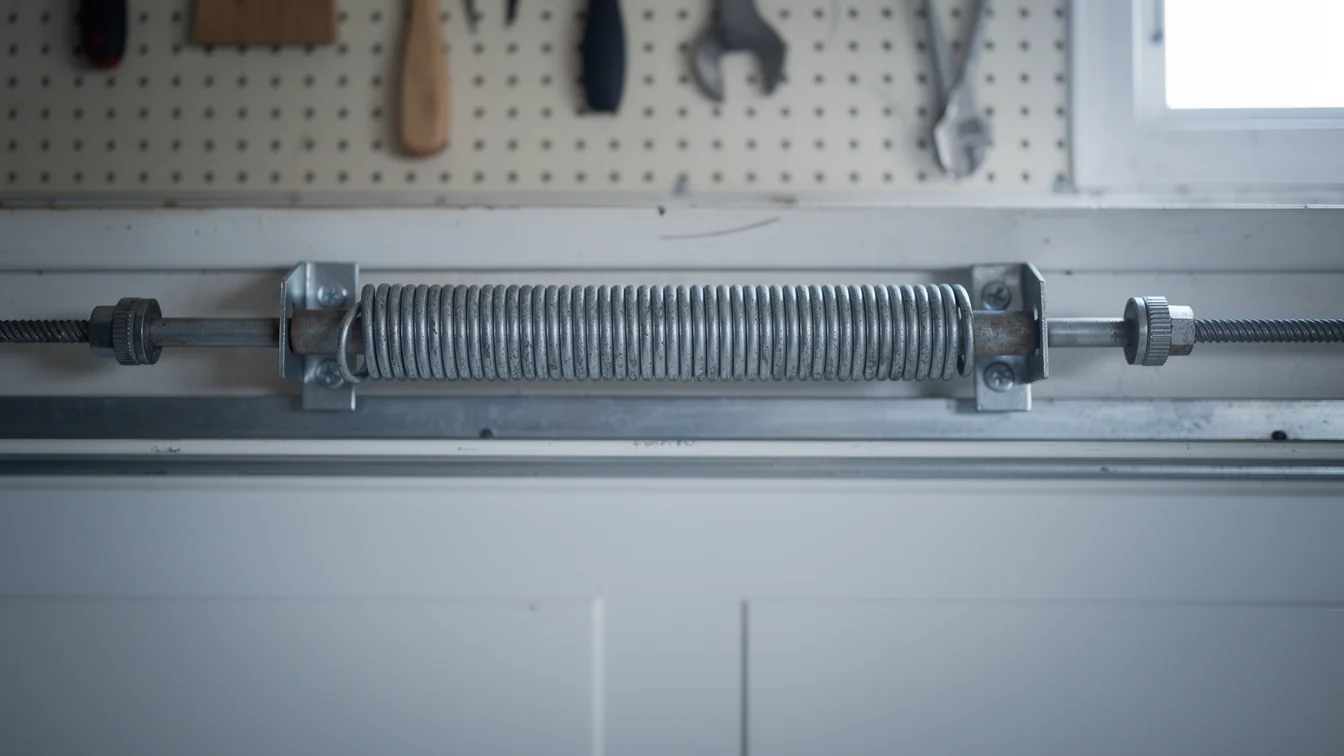
A garage door spring doesn't wear out evenly. It winds and unwinds thousands of times a year, and every cycle takes a small bite out of the steel until one day it just lets go, usually with a bang loud enough to bring the neighbors out. In Lincoln, the math is worse than it looks on paper. Housing across the area's named neighborhoods went up mostly between 1970 and 2007, with a median build year of 1981. That means a large share of the doors out here are running on original or first-replacement torsion springs that are well past the 7-to-10-year window most manufacturers rate them for. We see this most on the older end of that range - doors from the 1980s and 90s stock that make up most of what's across the 22 areas we work in. If your door is from that era and you haven't touched the spring yet, you're not unlucky, you're just due. The failure itself is almost always sudden: a cable goes slack, the door won't lift past a few inches, or it drops hard on the way down because the spring that was supposed to carry the weight isn't carrying anything anymore.</p><p>We don't rewind a spring that's already cracked or unwound - once the coil opens up, that section of steel is done and it gets replaced, not patched.</p>
What Changes With the Season
Lincoln sits in a climate band rated HEAT severe, and that heat does real work on a spring over the years. Steel expands and holds tension differently when it's been baking on a hot garage ceiling for months at a stretch, and the coil that's been flexing under that heat load all summer is more brittle going into the cooler stretch of the year than a spring in a milder climate would be. We get more calls once the weather turns and the first cold mornings hit, because that's when a spring that's already fatigued from a long hot season finally gives. It's not the cold that breaks it outright - it's the heat cycling all year that sets it up, and the cold snap that's the final straw. If your opener has been straining to lift the door, or you've noticed the door feels heavier by hand near the top of the swing, that's usually the spring losing its wind well before the season turns, not a sudden seasonal event. Worth checking before the weather shifts, not after a spring goes in cold weather and the door is stuck halfway up with a car behind it.
The Cost of This Job
We don't have a price list to post here, and a fair one depends on whether it's a single door or a double, and whether the spring size matches what's already on the track or needs to be upsized. What we can tell you is what drives the decision on most Lincoln jobs. With 107,221 households in the service area and 59,170 of those in owner-occupied houses, we see a wide mix of door sizes and ages, and the spring that fits a 1980s single-car door isn't the same part as what a 2000s-built double needs. At a median household income of $100,796, most of the homeowners we talk to decide against a patch repair once a spring has already broken, and go straight to replacing both springs on a double door at the same time, since the second one is usually close behind. That's a judgment call, not a rule - a single spring with plenty of life left doesn't need to come out just because its partner failed.</p><p>One limitation worth saying plainly: some of the heavier-duty springs for 1990s-era double doors aren't something we carry on the truck in every size, and ordering one can add a day to the job.</p>
What Local Conditions Do
Lincoln doesn't sit in isolation - the same 1970-2007 building wave that shaped this town runs through the towns around it too. Penryn is seven miles out, Loomis another seven, Sheridan eight, Newcastle nine, and the pattern holds all the way to Rio Linda at fifteen miles and North Highlands at fifteen. That matters because it means the spring-failure pattern we see on a Lincoln call - aging torsion hardware stressed by a HEAT severe climate - isn't a one-off. It's what the whole stretch of houses built in that era is heading toward, whether the address says Lincoln, Granite Bay, or Wheatland. For a homeowner here, the practical takeaway is that your door's age and the climate it's sat in for decades are doing more to predict a spring failure than anything you did or didn't do to maintain it. Lubricating the coil twice a year helps at the margins, but it doesn't rewind thirty or forty years of heat cycling on a spring that was never built to last that long.
Frequently asked questions
How do I know if it's the spring and not the opener?
If the door feels heavy when you lift it by hand with the opener disconnected, or it drops fast instead of lowering under control, that's a spring losing tension, not the opener motor. An opener that's straining but the door still moves smoothly by hand usually points to the opener or the track instead.
Why did my spring break in the morning and not during the day?
The spring doesn't fail because of the cold itself - it fails because a season of extreme heat has already fatigued the coil. The first cool morning is often just the moment a spring that was already close to the end finally lets go, not the cause of the break.
Should I replace one spring or both on a double door?
If one spring breaks on a double door, the other is usually close behind since they wind and unwind together on the same schedule. Most homeowners here choose to replace both at once rather than call back in a few months for the second one, but it's not mandatory if the other spring still has clear life left.
Can I just lubricate the spring instead of replacing it?
Lubrication slows wear on a spring that still has life in it, but it won't undo decades of heat-cycle fatigue on an original 1980s or 90s spring. Once a coil shows rust pitting, gaps between windings, or has already cracked, oil won't fix that - it needs to come off the shaft.
Related garage door services in Lincoln
More garage door guides
Book garage door service in Lincoln
Call now or request a quote - tell us what the door is doing and where you are.