
Lincoln, CA · Garage Door Service
Weather Seals and Drafts on Lincoln Garage Doors
Lincoln homes built 1970-2007 wear out weather seals under severe summer heat. Here's what's failing, when it happens, and what fixing it actually involves.
- Repairs & new doors
- Springs & openers
- Serving 5 nearby communities
What Is Going On
Most houses in this part of Lincoln went up between 1970 and 2007, with the median landing around 1981, and the bulk of the stock across the area's 22 named neighborhoods dates to the 1980s and 90s. That matters here because the weatherstripping on a garage door isn't built to last 40 years. The vinyl or foam seal along the bottom panel and the strips running up the sides were original equipment on a builder-grade door, and on a house from that era, they're long past their working life.
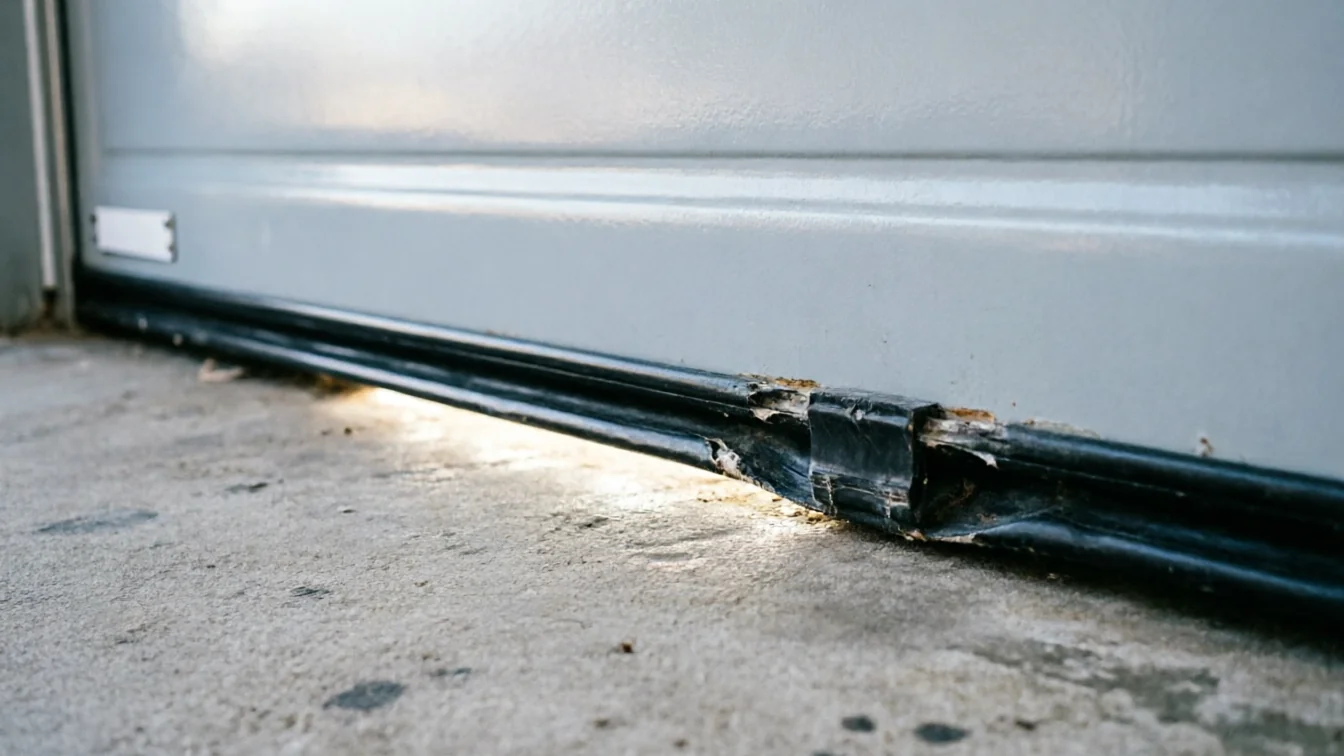
What you'll notice first is light coming in at the corners, or a thin gap you can feel air move through when the door's shut. Sometimes it's the bottom astragal seal that's cracked and curled away from the slab. Sometimes it's the side seals that have shrunk and pulled off the track. Either way, the fix is usually the seal itself, not the door panel behind it - but on an older frame, the channel that holds the seal can also be warped enough that a standard replacement won't seat right, and that's a different conversation.
One honest limitation: if the seal channel itself is bent or rusted through, swapping the strip won't solve the draft. That's a track or frame repair, and it costs more than a seal job.
What Changes With the Season
Lincoln sits in a severe heat climate band, and that's the main thing driving seal failure here, more than age alone. Vinyl and rubber weatherstripping hardens and cracks under sustained high heat and UV exposure, and a door facing west or south gets the worst of it through the stretch of hot months. You'll often see the bottom seal go first because it sits closest to the slab, which holds and radiates heat long after the sun's off the door.
The cracking tends to show up as brittleness you can see - the seal loses its flex and starts to split at the folds instead of compressing when the door closes. Once it's split, it stops doing its job even if it still looks mostly intact from a few feet away. On a house built in the 1980s or 90s, the original seal has usually already been replaced once or twice by the time this kind of cracking shows up again, which tells you how fast the material gives out under repeated heat cycling rather than from one bad summer.
Cold isn't the problem here the way it is in other climates - we don't see seals failing from freeze-thaw cracking. It's heat and UV, full stop, and that changes what seal material actually holds up.
The Cost of This Job
A seal replacement is one of the cheaper jobs we do on a garage door, and most of the cost is labor and the specific seal profile your track needs - not the material itself. Where it gets more expensive is when the channel holding the seal is damaged, which shows up more often on the older end of the local housing stock, houses built closer to the 1970-1981 range than the newer end toward 2007.
We can't quote an exact number without seeing the door and the track condition, and we won't pretend otherwise. What we can tell you is that a straightforward bottom-seal swap is a different job, time and cost both, than one where the side channels need to come off and get straightened or replaced. If your door is original to a house from the 1980s or earlier, there's a decent chance you're looking at more than just the seal.
The honest call, some of the time, is that if the seal keeps failing every couple of years because the channel geometry is off, replacing the whole bottom section once is cheaper long-term than repeating the seal job on a schedule. We'll tell you which situation you're in before we start, not after.
What Local Conditions Do
The service area here covers 107,221 households and 59,170 owner-occupied houses, a lot of them dating to the same 1980s-90s build wave, which means a lot of doors are hitting seal failure around the same age, in the same heat. Median household income in the area runs around $100,796, and what we see is that most owners here choose to fix the seal and move on rather than let a draft sit for years - it's a small job compared to a full door replacement.
We work doors in Downtown Lincoln, Lincoln Crossing, and Verdera, and out toward Penryn, Loomis, and Sheridan, along with the other communities in this stretch of Placer County. The pattern holds across most of them: older builder-grade seals, a lot of west and south-facing driveways catching full sun, and a steady trickle of calls once the heat really sets in and cracked seals start letting dust and heat through instead of keeping it out.
If you're hearing wind whistle around your door or feeling heat radiate through the gap on a hot afternoon, it's worth a look before the seal fails completely and the channel underneath starts taking the wear instead.
Frequently asked questions
Why does my garage door seal keep cracking every couple of years?
In this climate, sustained heat and UV exposure break down vinyl and foam weatherstripping faster than in milder areas, especially on doors that face west or south. If your house dates to the 1980s or 90s, the seal channel itself may also be worn, which makes new seals fail faster than they should. We can check whether it's the seal or the channel.
Can I replace the weather seal myself?
The bottom astragal seal is a common DIY job if the channel is straight and in good shape. Where it gets harder is on older doors where the track has warped slightly, which can make a new seal pop out again within months. If you've already replaced it once and it failed fast, that's usually the sign to have the channel checked.
Does a new seal fix a drafty garage in the summer heat?
Usually, yes, if the seal is the actual problem. But on older builder-grade doors, heat-warped channels or gaps at the corners from a settled frame can let air through even with a new seal installed. We check the whole perimeter, not just the bottom strip, before we recommend a fix.
Why does the bottom seal fail before the side seals?
The bottom seal sits closest to the concrete slab, which absorbs and holds heat through the day and keeps radiating it well after sunset. That extra heat cycling breaks down the material faster than the side seals see, which is why the bottom strip is usually the first thing to crack or curl.
Related garage door services in Lincoln
More garage door guides
Book garage door service in Lincoln
Call now or request a quote - tell us what the door is doing and where you are.