
Lincoln, CA · Garage Door Service
Why a Door Goes Off Track in Lincoln
Lincoln's housing stock runs mostly 1970s-2000s with original track hardware, and the area's severe summer heat warps rail and hinges. Here's what actually happens.
- Repairs & new doors
- Springs & openers
- Serving 5 nearby communities
What Is Going On
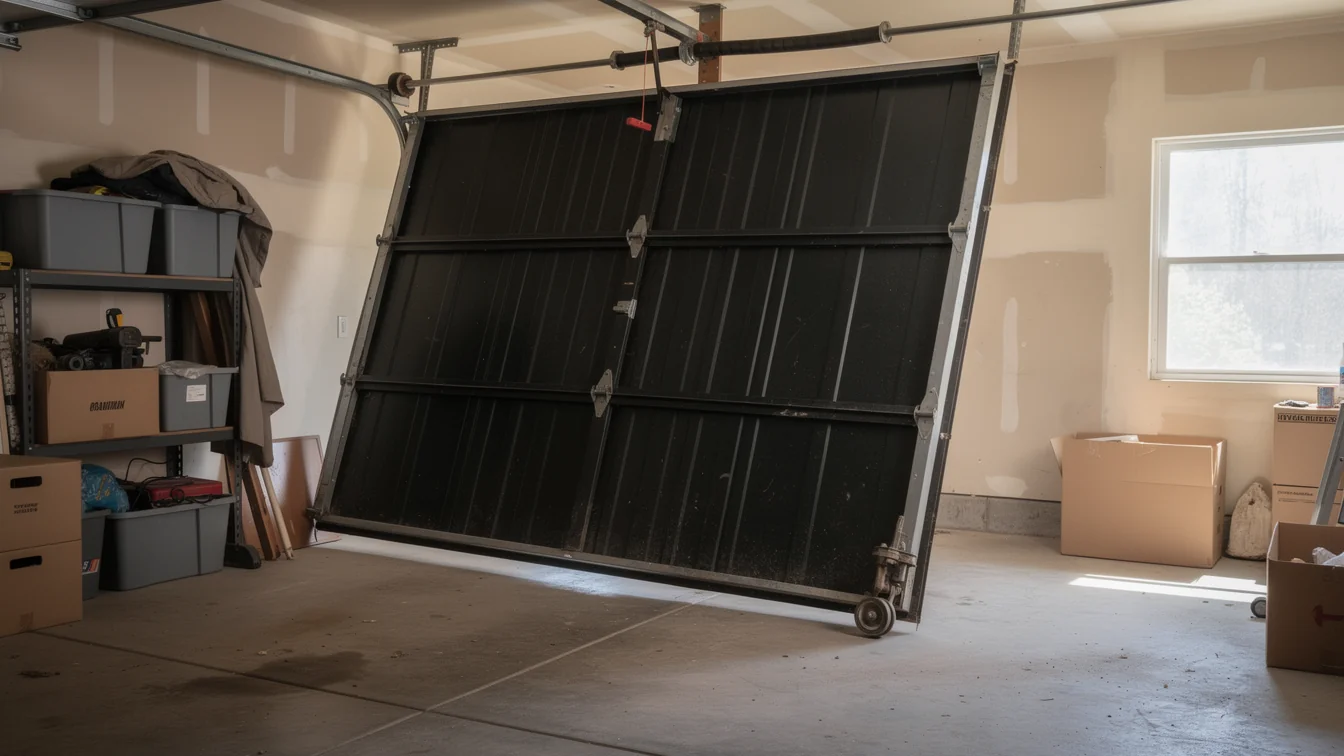
A door goes off track when the rollers stop riding square inside the vertical or horizontal rail, usually because the rail itself has bent, the bracket holding it has loosened, or the cable on one side has slipped off its drum. Once one roller rides wrong, the panel racks sideways and the next roller follows it out. Most of the time it isn't one dramatic event. It's a bracket that's worked loose over years, a hinge that's stretched its screw holes, or a rail that's taken a hit from a car mirror or a bike handlebar and never gotten straightened.
This matters more in Lincoln than it would somewhere with newer housing stock, because most of the houses in Lincoln's established neighborhoods went up between 1970 and 2007, with the median build year sitting around 1981. That's a 40-plus-year-old garage door system in a lot of cases, even if the door itself has been swapped out once. The track brackets are often original, screwed into framing that's shifted slightly over four decades, and that's exactly the kind of small misalignment that turns into a door riding off its rail.
What Changes With the Season
Heat is the variable that does the most damage to track alignment here. Lincoln sits in a severe-heat climate band, and that heat is one of the biggest reasons tracks walk out of alignment in this area. Steel track expands as it heats through the day and contracts overnight, and over enough cycles the bolts holding it to the framing back out a thread at a time. On an older bracket that's already a little loose, that cycle is what finally lets the rail lean just enough for a roller to climb out.
The other seasonal factor is the door itself. Wood and composite panels that have taken on heat swell slightly at the edges, which changes how much pressure the rollers see as they travel the curve into the horizontal track. A door that's tracked fine for years can start binding in the hottest stretch of summer and then loosen back up once temperatures drop, which is often the first sign an owner notices before a full derailment.
The Cost of This Job
We don't have a flat number to put here because the range is wide and depends on what's actually wrong. A simple case - a roller popped out of a straight section of track, nothing bent - is a short job: realign the rail, reset the roller, check the brackets. A bent rail is different work; it either gets straightened or replaced, and if the bend happened at a weld point or a joint, straightening usually isn't worth the labor compared to just swapping that section of track.
What we can tell you is that in a service area where the median household income runs around $100,796, most owners we talk to want the job done right the first time rather than patched twice. That usually means we're honest up front about whether a track repair will hold or whether the hardware's old enough that replacing the track and rollers together is the better call. We won't talk you into a full hardware replacement if a bracket reset will do the job.
What Local Conditions Do
Across the roughly 22 named areas that make up this part of the Lincoln market, most of the housing is 1980s and 90s stock, and the pattern repeats from one subdivision to the next: original track brackets, decades of heat-cycle loosening, and rollers that have never been swapped. With 59,170 owner-occupied houses across the service area, a meaningful share of them fall into that same build window, which means the same failure mode shows up in similar houses blocks apart.
The fix isn't different because of the heat, but the maintenance interval should be shorter than it would be in a milder climate. Checking bracket bolts and roller condition once a year catches the loosening before it turns into a door riding off the rail. On an older door, we'd rather tighten six bolts on a service call than get called out after the panel's already bent from running off track.
Frequently asked questions
Can I push a door back onto its track myself?
You can sometimes pop a roller back into a straight section of track if the opener is disconnected and the door is manually supported, but if the rail is bent or a cable has slipped, forcing it back risks bending the panel or snapping a cable under tension. If the door won't move freely by hand, stop and call it in.
Why does this happen more in summer here?
Lincoln's summer heat cycles the steel track through daily expansion and contraction, which slowly backs out the bolts holding the rail to the framing. On older hardware that's already a little loose, that's often what finally lets a roller climb out of the rail during the hottest months.
Is a bent track always a full replacement?
Not always. A mild bend in the middle of a straight run can sometimes be straightened. A bend at a joint or near a bracket usually isn't worth fixing by hand - the section gets replaced instead, since labor to straighten it often costs more than the part.
Related garage door services in Lincoln
More garage door guides
Book garage door service in Lincoln
Call now or request a quote - tell us what the door is doing and where you are.